

What kills creativity?
A neuroscience perspective on keeping the spark alive when times are tough

Your organisation cares about solving problems so, naturally, it cares about creativity. Not the “we need more Post-its on a whiteboard” kind - that is a means, not an end - but the sort that helps people see options, connect dots, and generate workable new moves under pressure. Here are three takeaways grounded in neuroscience that can help point the way to keeping creativity alive when the environment is demanding, and times are challenging.
First, perception of threat is the fastest creativity killer. When people feel watched, judged, or out of control, the brain shifts into narrower, more habitual modes. Stress causes us to function on automatic, going down paths that appear safe since they are “tried and true.”
Second, creativity needs two gears - the brain has to generate possibilities and then evaluate them. If you demand both at once, especially in public, you get neither. Or rather, you get a theatrical performance of both, and that’s actually worse.
Third, creative energy is sustained by intentional rhythm: protected downtime, movement, and repeatable practice - not as “wellbeing extras”, but as conditions for the brain to keep doing creative work. When you see an artist stare into space, perhaps chewing on their pen, or the tip of a brush, they are simply working within that rhythm’s downtime mode.
Let’s expand on those, and translate them into organisational design.
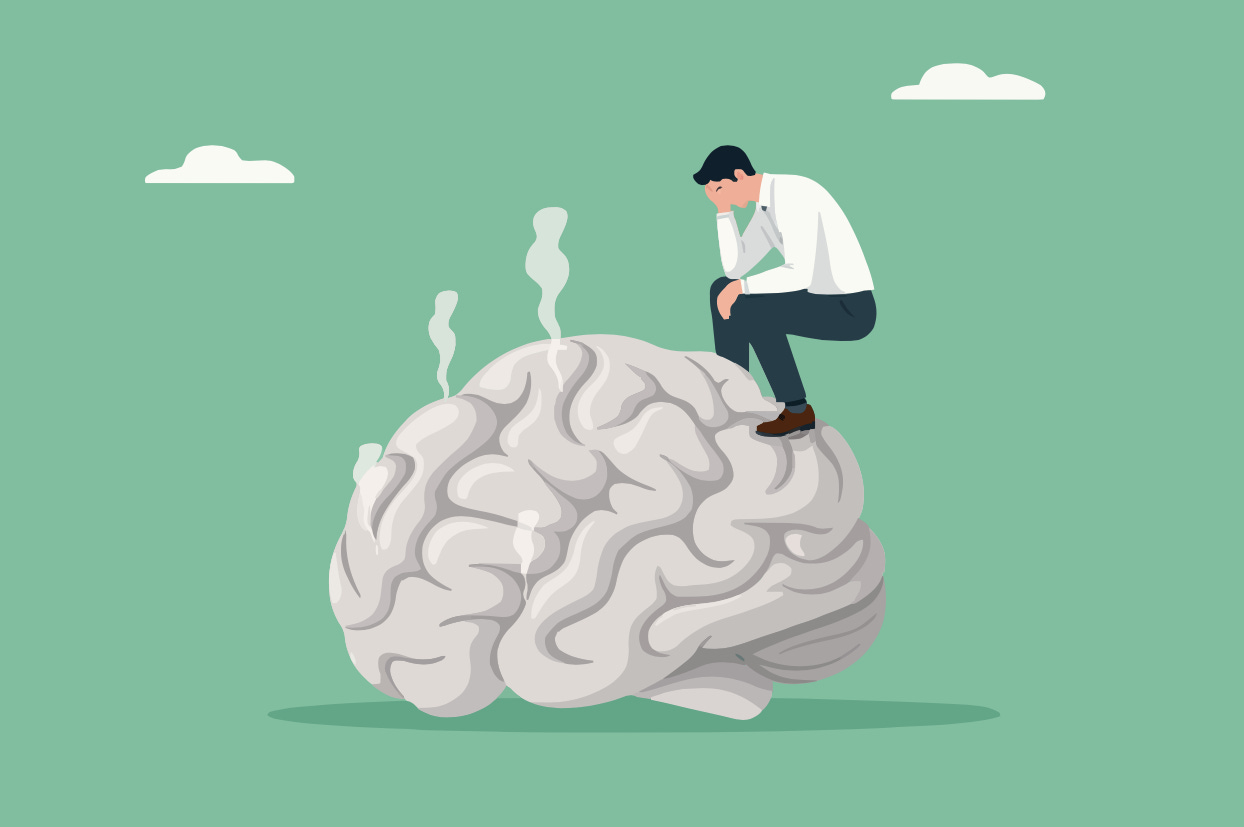
1) Perception of threat narrows the brain’s options
One of the most consistent findings in neuroscience is that stress changes what the brain is good at. The prefrontal cortex supports many of the capabilities organisations mean when they say they want “innovative thinking”: flexible attention, working memory, planning, and the ability to hold multiple options in mind. Under stress, that system becomes less reliable. In a widely cited review, Yale neuroscientist Amy Arnsten wrote: “Even quite mild acute uncontrollable stress can cause a rapid and dramatic loss of prefrontal cognitive abilities.”
You can feel this at work. When the stakes feel high and safety feels low, people stop exploring. They reach for the “correct” answer, default to imitation, make decisions that minimise exposure rather than maximise insight.
So the practical organisational point is simple: if you want creativity in hard times, begin by reducing uncontrollable stressors where you can, and increasing agency and clarity where you can’t. Creativity does not flourish in a climate of permanent appraisal.
2) Creativity is a collaboration between “spontaneous” and “controlled” networks
Creativity is often described as wild idea generation, but the brain’s creative work is more nuanced. It involves cooperation between networks associated with spontaneous thought and networks associated with cognitive control.
In a study of divergent thinking (a standard research measure of creative idea generation), neuroscientist Roger Beaty and colleagues concluded: “Such dynamic coupling suggests that divergent thinking involves cooperation between brain networks linked to cognitive control and spontaneous thought.” You cannot ask someone to be freely generative and tightly correct at the same time. If you do, the evaluative system wins, because it is socially safer.
A useful design move is to separate the phases. Create a protected space for option generation (where early, imperfect ideas are expected), and a separate space for evaluation and refinement (where scrutiny is welcome). When those phases are blended into a single public performance, people become cautious. And caution is rarely the parent of novelty.
“We are occupying our brain with things to think about, [not giving enough] downtime to let ideas meander around. It is occupying our brains in such a way that it crowds out that downtime that is important for creativity.”
3) Creative energy is sustained by rhythm: downtime, movement, and practice
The brain needs “open” time to connect ideas. That’s a mechanism, not a romantic notion.
In an interview about the neuroscience of creativity, neuroscientist Rex Jung described the modern problem bluntly: “We are occupying our brain with things to think about, [not giving enough] downtime to let ideas meander around. It is occupying our brains in such a way that it crowds out that downtime that is important for creativity.”
If the weekly schedule on the shop floor is set up for maximum visible busyness, you’ll get maximum visible busyness. You won’t get incubation, or slow creative drift, or the kind of mental wandering that often precedes a useful new connection. Sustained creativity depends on repeatable rhythms: a little protected time to generate, a little protected time to refine, enough downtime to incubate, and enough movement to change mental state. This is neither showy nor dramatic - it is a method.
And yes, movement matters, too. Stanford research found that creative thinking improves while a person is walking and shortly thereafter; the act of walking itself, not the scenery, was the key factor. In reporting on that work, Oppezzo and Schwartz wrote: “Many people anecdotally claim they do their best thinking when walking. We finally may be taking a step, or two, toward discovering why.” This is where “creative habits” stop sounding like warm and fuzzy lifestyle advice and start sounding like operations instead.
What this changes in the workplace:
You don’t keep creativity alive by telling people to “be more creative”. When did that ever have the desired effect? You keep creativity alive by designing the conditions that make creative cognition possible.
One way to frame this comes from neuroscientist David Eagleman. Speaking to educators, he argued that the most important skill is “cognitive flexibility,” or “the ability to be creative and put ideas together in new and innovative ways.” You can hear the organisational translation immediately: cognitive flexibility is what brittle systems lose first under pressure.
A second Eagleman line is even more applicable on tough times (or ever, really.) “Failures are the portal to discovery,” he said, urging leaders to build cultures “where it’s OK to get a wrong answer.”
That is not an abstract cultural value. It is a specification for how you run meetings, how you respond to early drafts, how you structure pilots, and how you separate learning phases from performance phases.
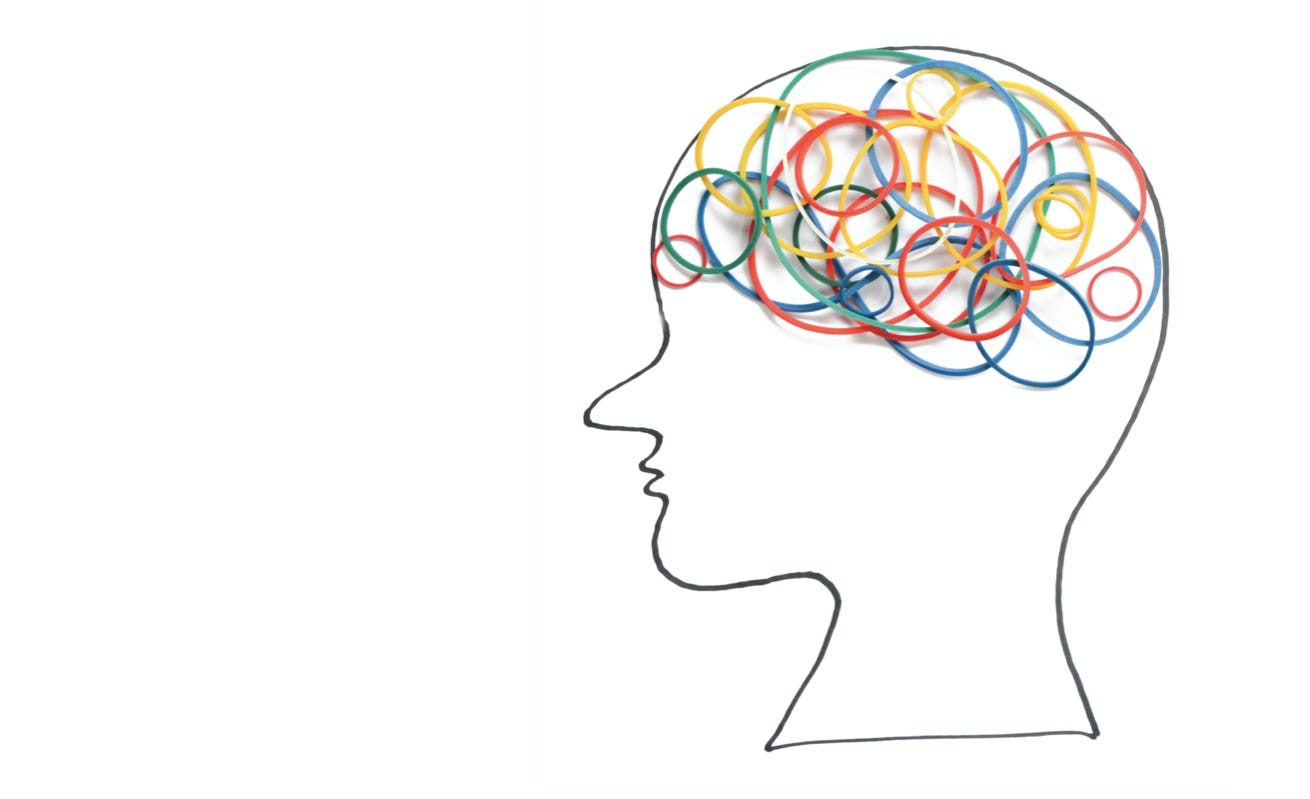
Why this matters for Art in a Place of Work:
All this is why we think an artist-in-residence model belongs inside organisations that are serious about adaptability. Art in a Place of Work can easily suffer being categorised as an “arts perk” but it is actually a structural intervention that challenges the local rules of attention, permission, and experimentation, for the best reason - to make those rules better, more effective and more up-to-date.
A residency creates a protected space where divergent exploration can happen without immediate judgement, and where the “two gears” of creativity are honoured: generative work first, evaluative shaping later. It also demonstrates how new materials, unfamiliar constraints, and new ways of seeing can offer exactly the kind of novelty that can shake the brain off its “path of least resistance”, or at least of most familiar comfort.
In challenging times, the point is not to add more stimulation. Raise your hand it you think we have plenty enough stimulation in our lives already… The point is to protect cognitive flexibility: reduce threat, design the phases properly, and create rhythm. This requires an intentional approach to both time management and provision of appropriate physical space, but it is how you keep creative energy going.
—
References and further reading / listening:
Arnsten, Amy F. T. “Stress signalling pathways that impair prefrontal cortex structure and function.” Nature Reviews Neuroscience 10, no. 6 (2009): 410–422. https://pubmed.ncbi.nlm.nih.gov/19455173/
Beaty, Roger E., Mathias Benedek, Paul J. Silvia, and Daniel L. Schacter. “Default and Executive Network Coupling Supports Creative Idea Production.” Scientific Reports 5 (2015): 10964. https://www.nature.com/articles/srep10964
Eagleman, David. The Brain: The Story of You. New York: Pantheon Books, 2015. https://eagleman.com/books/the-brain/
Jung, Rex. “Rex Jung — Creativity and the Everyday Brain.” The On Being Project, August 20, 2015. https://onbeing.org/programs/rex-jung-creativity-and-the-everyday-brain/
Land, George. “The Failure of Success.” TEDxTucson talk, February 16, 2011. YouTube video.
Oppezzo, Marily, and Daniel L. Schwartz. “Give Your Ideas Some Legs: The Positive Effect of Walking on Creative Thinking.” Journal of Experimental Psychology: Learning, Memory, and Cognition 40, no. 4 (2014): 1142–1152. https://pubmed.ncbi.nlm.nih.gov/24749966/
Pierce, David. “What Neuroscience Teaches Us About Fostering Creativity.” THE Journal, June 25, 2018. https://thejournal.com/articles/2018/06/25/what-neuroscience-teaches-us-about-fostering-creativity.aspx
Stanford Report. “Stanford study finds walking improves creativity.” April 24, 2014. https://news.stanford.edu/stories/2014/04/walking-vs-sitting-042414